
The Short Answer
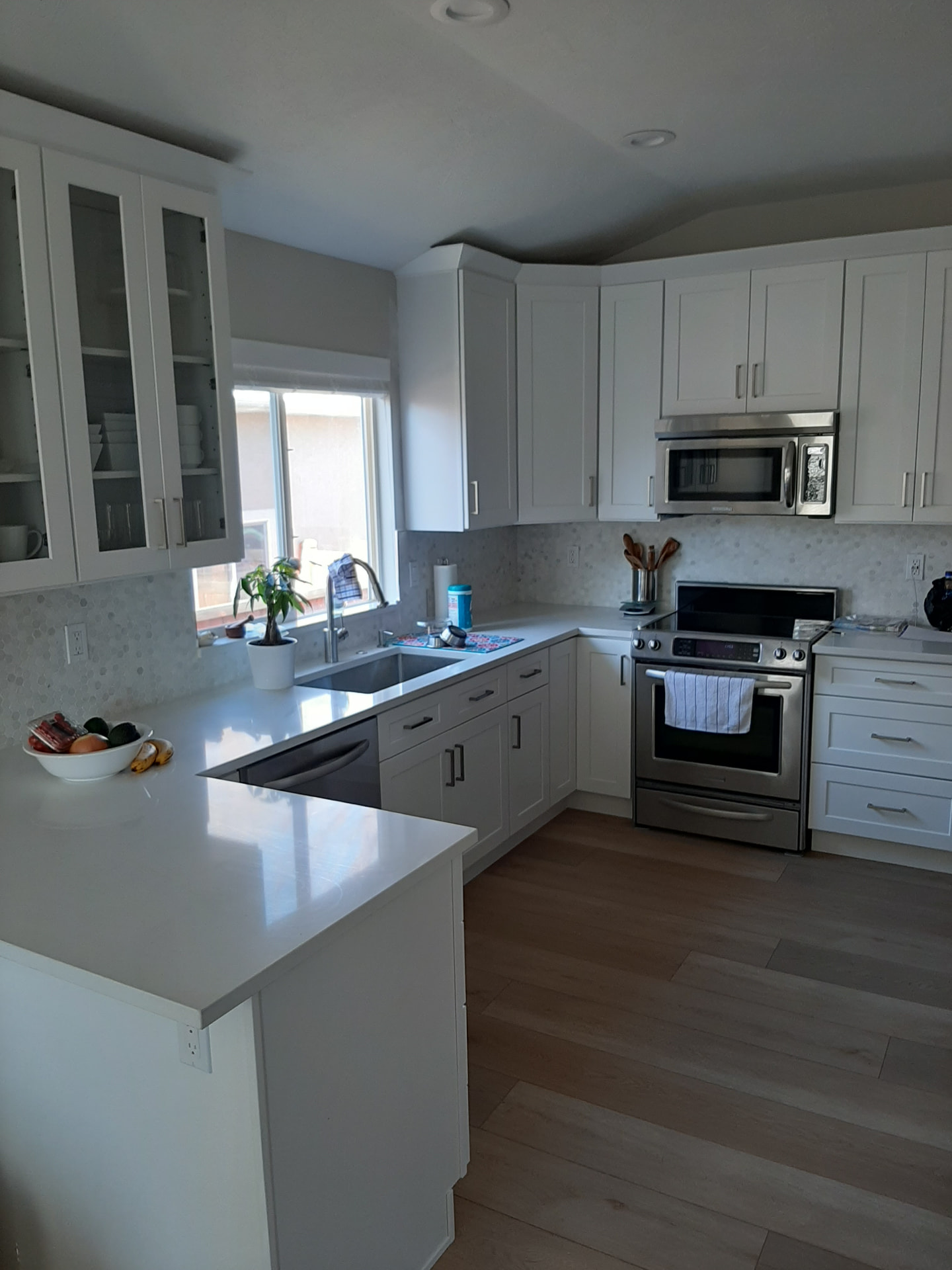
Quartz is an engineered, non-porous surface that does not need sealing and has consistent colour, making it the lower-maintenance choice. Granite is natural stone with unique patterns and good heat tolerance, but it needs periodic sealing. Both work well on correctly installed cabinets.
Quartz vs Granite at a Glance
- Maintenance. Quartz: no sealing. Granite: periodic sealing.
- Heat. Quartz: use trivets. Granite: more heat-tolerant.
- Appearance. Quartz: consistent pattern. Granite: every slab is unique.
- Stain resistance. Quartz: very high. Granite: good when sealed.
- Seams. Both need planned seams on long runs and L-shapes.
What Is Quartz?
Quartz countertops are engineered from crushed stone and resin. The result is a non-porous, uniform surface that resists staining and does not need sealing, which is why it is a popular choice for kitchens and bathroom vanities.
What Is Granite?
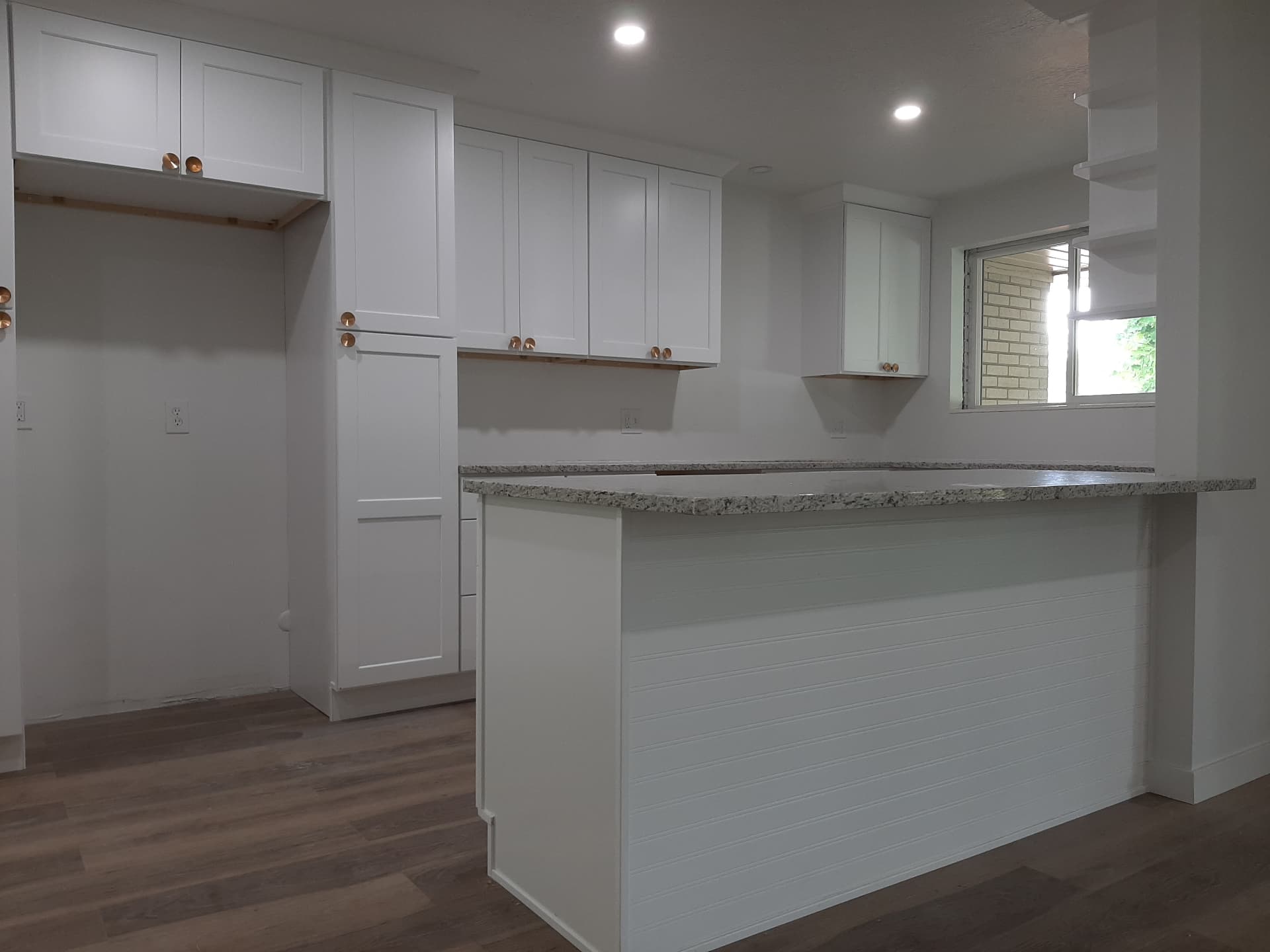
Granite is quarried natural stone. Each slab has its own movement and colour, so many homeowners view slabs before committing. Sealing keeps it resistant to stains.
Which Suits a Busy Kitchen?
Families who want to wipe and go often choose quartz. People who want natural variation and do not mind sealing often choose granite. Both hold up well to daily use when installed on level, well-supported cabinets.
Coordinating Countertops With Cabinets
Choose the Material Early
The countertop affects cabinet colour, sink type, edge details and sometimes cabinet support, so settle it during design.
Measure After Cabinets Are Installed
Final templating happens off installed, level cabinets so the top fits the real room. Our kitchen remodel order guide shows where that step falls.
Countertops Installed With Your Cabinets
Learn more on our custom countertops page. Utah Cabinet Works designs, builds and installs cabinetry from our shop in West Jordan, and we serve homeowners across the Salt Lake Valley. You can see finished rooms in our project gallery and read more about how we work.