The Short Answer
Taking cabinets to the ceiling adds storage, removes the dust shelf above the uppers and makes the room look taller and more finished. The trade-offs are higher cost and top shelves you need a step stool to reach, so they suit items you use occasionally.
Benefits of Ceiling-Height Cabinets
- More storage in the same footprint
- No gap on top to collect dust
- A taller, more built-in look
- Room for stacked uppers or glass-front display cabinets
Drawbacks to Consider
- More cabinetry, so higher cost
- Top shelves need a step stool
- Ceilings that are not level need careful scribing and trim
Design Options for Tall Ceilings
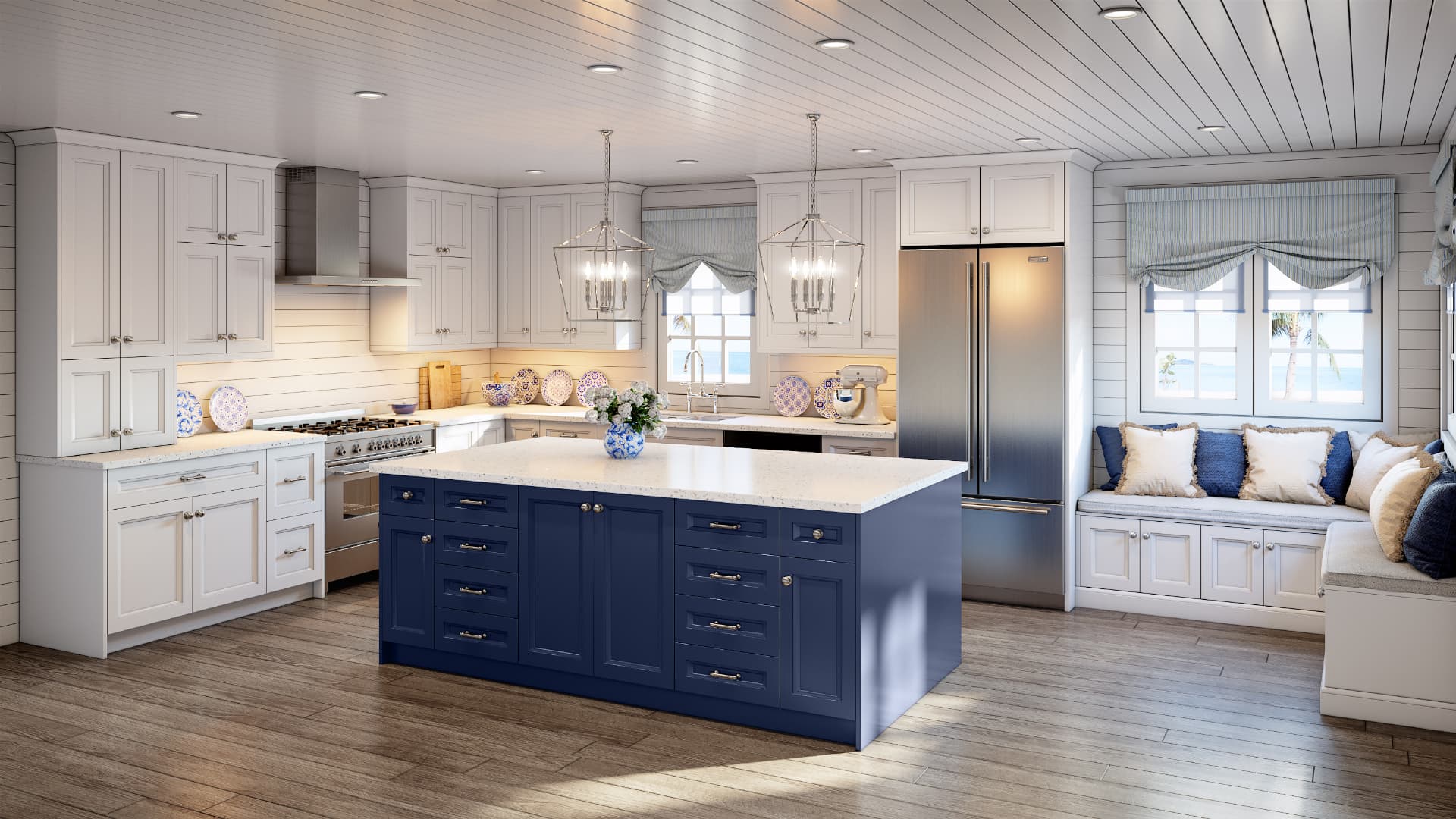
Stacked Uppers
A shorter cabinet stacked above the main upper keeps everyday items reachable and puts seasonal items above.
Glass-Front Top Row
Glass or open upper boxes lighten a tall wall and display items you rarely handle.
Crown and Scribe Moulding
Moulding closes the gap to an uneven ceiling so the cabinetry looks built in.
When Cabinets to the Ceiling Make Sense
They make most sense in kitchens short on storage, rooms with tall ceilings, and homes where the look matters. With 8-foot ceilings, ceiling-height uppers are often an easy win. Very tall or vaulted ceilings usually call for custom cabinets sized to the wall; see custom vs semi-custom cabinets.
See Ceiling-Height Cabinetry
Browse kitchen cabinet projects or read about our kitchen cabinets. Utah Cabinet Works designs, builds and installs cabinetry from our shop in West Jordan, and we serve homeowners across the Salt Lake Valley. You can see finished rooms in our project gallery and read more about how we work.