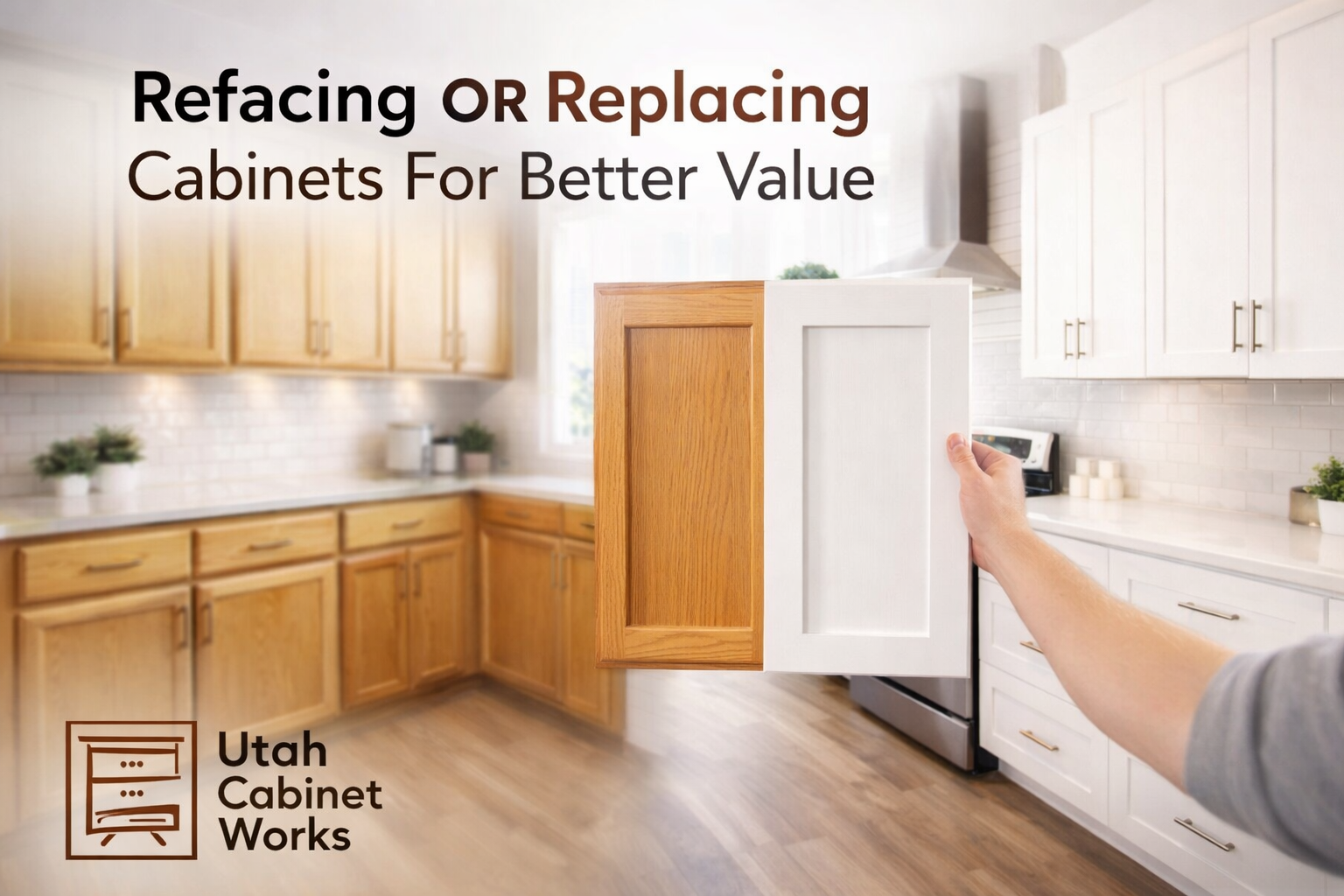
Cabinet work sets the tone for a kitchen more than most finishes. Doors and drawer fronts dominate the sightline, and the boxes carry the daily load. When a space feels dated or worn, two paths usually come up fast refacing or full replacement.
A good decision comes from facts, not mood. Money, time, and performance all matter, and the wrong approach can leave a home with the same functional issues wrapped in a new look.
Start With Clear Definitions
Refacing and replacement share a goal, a better-looking kitchen, yet the scope differs. One approach keeps most of the existing structure. The other rebuilds the system from the wall out.
Here are the key elements that separate the two choices.
What Refacing Covers
Refacing keeps the cabinet boxes in place and swaps the visible surfaces. Most projects replace doors, drawer fronts, and hardware, then add a new veneer or finish to the exposed frame areas.
Refacing can include upgrades such as soft-close hinges, new drawer slides, or added roll-outs. Layout stays the same since the boxes remain fixed.
What Full Replacement Includes
Replacement removes existing boxes and installs new casework. That change allows new sizes, new storage planning, and new configuration.
A replacement scope often pairs with other work such as flooring repair, wall patching, new lighting, or updated plumbing locations. Cabinets and countertops usually get sequenced together.
Hybrid Approaches That Can Work
Some homes benefit from a mixed plan. Base boxes may be replaced to fix storage and workflow, with uppers refaced to control spend and keep a lighter schedule.
A hybrid plan needs careful finish matching so the room reads as one set, not a patchwork.
Cost Drivers And Budget Ranges
Pricing depends on size, finish, and the level of structural change. Labor conditions, access, and the age of the home add meaningful swing to totals.
These are the main cost drivers that shape a realistic budget.
Refacing Costs And What Moves Them
Refacing spend rises with door count, specialty finishes, and veneer material. Natural wood veneer usually sits higher than thermofoil or laminate, and custom door profiles add more labor. Linear-foot estimates often run from about $100 to $455, with averages in the middle of that band.
Whole-kitchen refacing totals often land in the mid-thousands for many homes, with common ranges reported around $4,200 to $10,200.
Replacement Costs And What Moves Them
Replacement totals shift based on cabinet type stock, semi-custom, or custom and the scope of tear-out and prep. Installed pricing commonly falls between about $100 and $650 per linear foot for stock or semi-custom work, with custom runs often higher.
A 10 by 10 kitchen can land around $2,000 to $13,000 for stock or semi-custom installs, then climb for custom builds.
Budget Range Snapshot Table
| Scope Item | Typical Range | Notes That Change The Number |
|---|---|---|
| Refacing Total Project | $4,234 to $10,226 | Door count, veneer type, added roll-outs |
| Refacing Per Linear Foot | $100 to $455 | Material choice and profile detail |
| Replacement Per Linear Foot | $100 to $650 | Stock or semi-custom installed |
| Custom Replacement Per Linear Foot | $500 to $1,200 | Bespoke sizing and finishes |
Numbers above reflect broad national reporting. Local labor rates and material lead times can shift totals in either direction.
Timeline And Jobsite Disruption
Time on site affects daily life more than most owners expect. A kitchen can stay usable through parts of refacing, while replacement can remove key functions for a longer stretch.
The following are the schedule factors that decide how disruptive the work feels.
Typical Refacing Timeline
Many refacing projects finish in a working week, with common ranges around three to five days from start to finish. That pace comes from keeping the existing boxes and focusing on visible surfaces.
Noise and dust still exist, yet sinks and appliances often stay in place. Day-to-day routines can continue with small adjustments.
Typical Replacement Timeline
Cabinet installation itself often takes several days for an average kitchen. The bigger timeline impact comes from removal, wall prep, countertop templating, fabrication, and trades coordination.
A full replacement plan can stretch across multiple weeks once ordering, countertop work, and finishing steps get added.
What Most Often Delays The Job
Older homes bring surprises. Out-of-plumb walls, damaged subfloors, and uneven corners can slow progress. Countertop lead time also drives completion, since final plumbing and sink hook-up wait on the top.
Steps that reduce disruption can help keep the household calm.
-
Confirm appliance sizes before ordering doors and panels
-
Clear counters and cabinets two days ahead of demo
-
Set up a temporary food station with a microwave and coffee maker
-
Plan trash and recycling access if the pull-out bin gets removed
-
Schedule countertop templating as soon as base units get installed
Results You Can Expect Over Time
A new look feels great on day one. Long-term satisfaction comes from function, stability, and ease of maintenance.
Here are the main outcomes that separate a cosmetic refresh from a lasting upgrade.
Durability And Maintenance
Refacing delivers strong results when existing boxes stay square, dry, and structurally sound. Solid hardware upgrades can improve daily feel, yet the underlying box still dictates long-run performance.
Replacement supports a full reset. New boxes, better fastening, and modern slide systems can raise the quality bar across the whole kitchen.
Layout And Storage Improvement
Refacing keeps the layout. Storage can improve through inserts, roll-outs, and better drawer hardware, yet the footprint stays fixed.
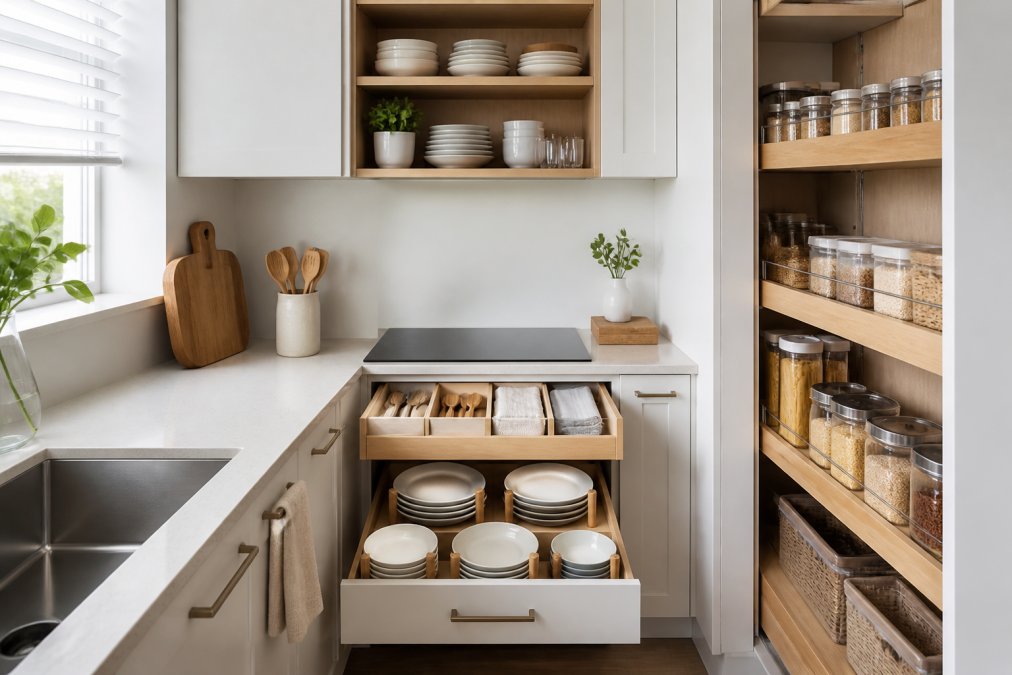
Replacement opens the door to real workflow change. Wider drawers, pantry towers, and better corner solutions can get designed from scratch. That shift often reduces clutter and improves daily efficiency.
Resale And Perceived Quality
Buyers notice doors, hardware, and alignment. A tight reveal and smooth close can signal quality across the home. Refacing can deliver that impression when craftsmanship is high and the boxes remain in good condition.
Replacement supports bigger value stories. A new layout and improved storage can feel like a full kitchen upgrade, not only a facelift.
A Decision Framework Utah Cabinet Works Uses
The right call starts with a short assessment. Condition, goals, and time constraints tell the story faster than a finish sample board.
These are the questions that help guide a confident choice.
Questions Worth Asking Early
-
Are the boxes square with tight joints and no sag
-
Has the sink base seen leaks or swelling
-
Do drawers rack, scrape, or stick under load
-
Does the current layout work for cooking and cleanup
-
Are you planning new counters, flooring, or appliance moves
-
Do you want deeper storage, more drawers, or a pantry zone
Answers tend to point toward one path without much debate.
When Refacing Fits Well
Refacing often lands best in these scenarios.
-
Box condition stays strong with no moisture damage
-
Layout works and storage feels close to right
-
Budget targets focus on visible improvement
-
Time on site needs to stay short
-
Countertops will remain in place
When Replacement Fits Better
Replacement usually makes sense in these situations.
-
Boxes show swelling, mold, sag, or loose joints
-
Layout needs change for better workflow
-
Appliances will shift, or a wall will move
-
A new countertop is already planned
-
Storage needs call for new sizing and configuration
Red Flags That Push Toward Replacement
Certain issues rarely respond well to refacing.
-
Repeated water exposure at sink and dishwasher bases
-
Severely out-of-level runs that force misaligned doors
-
Damaged face frames that cannot hold hinges securely
-
Boxes built from degraded particleboard with crumbling screw points
Planning Tips That Protect The Outcome
A cabinet project runs smoother when decisions get made in a clean sequence. Style follows function, then finishes lock in last.
Here are the planning moves that keep quality high and stress low.
Match The Approach To The Home
A quick refacing job can look out of place in a full gut remodel. A full replacement can feel like overspend in a well-kept kitchen that only needs fresh faces.
Project scope should match the rest of the house in finish level and performance.
Lock Hardware And Finish Choices Early
Door style, finish sheen, and hardware size affect the final impression. Early selections reduce midstream changes that can disrupt ordering and drilling.
Sample reviews under the kitchen lighting help avoid surprises once everything lands in place.
Document What Stays And What Changes
Refacing plans should spell out what remains, what gets replaced, and what gets upgraded. Replacement plans should list scope beyond cabinets such as patching, paint, flooring repair, and countertop sequencing.
Clarity up front supports fewer change orders and a smoother installation phase.
A kitchen can look new through refacing, and a full rebuild can reset function for decades. The right choice comes from box condition, layout goals, and the level of disruption that the household can accept. When those factors line up, the investment feels steady long after the tools leave the driveway.