
Cabinet hardware is the handshake of a kitchen or bath. People touch it dozens of times a day, then decide if the room feels solid or flimsy. That judgment lands fast, long before anyone notices a paint sheen or a panel profile.
A smart hardware plan supports smooth operation, lowers service calls, and keeps the space feeling cared for. It can even protect margin on projects with tight schedules, since fewer callbacks free up crews for the next job.
Why Hardware Decisions Carry Real Business Weight
Hardware seems small on a scope sheet, yet it sits at the center of daily wear. Pulls get yanked by kids, hinges fight gravity, and drawer slides carry heavy loads. Weak parts show themselves early through squeaks, loose screws, and chipped finishes.
Here are the main reasons hardware deserves early attention.
Perception Starts At The Touch Point
Clients rarely praise a hinge brand, though they notice the feel of a door. A steady close and a comfortable grip create confidence in the whole build. That confidence affects reviews, referrals, and resale conversations.
Service Calls Start With Simple Failures
A wobbly handle leads to stripped screw holes. A cheap slide leads to a stuck drawer. Each problem steals time from your team and trust from your client.
Standard Sets Reduce Friction Across Projects
A consistent set of pull sizes, hinge types, and slide specs simplifies procurement. Install time drops when crews know the drill pattern and placement rules.
Knobs And Pulls That Match Hands And Doors
Knobs and pulls set the room’s tone, though performance comes first. The wrong size makes cabinets feel awkward. Poor placement makes a clean door look off. Finish quality decides how quickly the hardware looks tired.
These are the choices that shape comfort and visual balance.
Sizing Rules That Avoid Regret
Pull length should relate to door height and drawer width. Oversized pieces can overwhelm a small door. Tiny pieces can feel stingy on wide drawers.
A practical sizing guide helps.
-
3-inch to 5-inch pulls suit many uppers and narrow drawers
-
6-inch to 8-inch pulls fit most base drawers and pantry doors
-
10-inch and longer pulls work well on wide drawers and tall doors
Grip clearance matters more than trend. Look for enough space under the pull for knuckles, especially near appliance panels.
Placement That Looks Intentional
Position pulls with a repeatable rule. A consistent layout reads clean across a long run of cabinets.
Common placement patterns include.
-
Uppers with pulls placed 2 inches to 3 inches from the lower corner
-
Base doors with pulls placed 2 inches to 3 inches from the upper corner
-
Drawers with pulls centered left to right and placed in the upper third
Use a drilling jig for repeat accuracy. Small placement drift shows up quickly in strong light.
Material Choices That Feel Good In Use
Solid metal pieces tend to hold up better than hollow options. Stainless steel, brass, and zinc alloys each bring a different feel in the hand. Edges should feel smooth, with no sharp seams.
Texture has a role in busy homes. A lightly textured pull can hide fingerprints and minor scuffs.
Finishes And Wear Patterns
Finish selection should match the room’s traffic level. Matte and brushed surfaces hide marks better than glossy plating. Dark coatings can show scratches if the base metal peeks through.
This table gives a quick view of common choices.
| Finish Type | Look And Feel | Wear Visibility | Fit For |
|---|---|---|---|
| Brushed Nickel | Soft sheen, neutral tone | Low | Family kitchens, rentals |
| Matte Black | Modern, crisp | Medium | Contemporary spaces |
| Satin Brass | Warm, premium | Medium | Feature islands, statement rooms |
| Polished Chrome | Bright, reflective | High | Low-touch areas, baths |
Hinges That Keep Doors True And Quiet
Hinges do the unseen work. They hold the door’s alignment, control motion, and carry stress at the screw points. When hinges fail, doors sag and gaps widen.
The hinge details below drive long-term performance.
Overlay And Inset Fit
Door style dictates hinge type. Full overlay doors typically use concealed European hinges. Inset fronts need tighter tolerances and hinge options designed for that reveal.
Confirm overlay dimensions early. Hinge selection affects how doors clear adjacent panels and appliance trims.
Soft Close Performance That Stays Consistent
Soft close hinges reduce slam noise and protect door edges. Quality varies widely. Better hinges keep their damping over time, even with heavy doors.
Choose hinges with adjustable settings when possible. That allows a smoother close across different door weights.
Screw Hold And Door Weight Ratings
Hinge cups and mounting plates rely on secure fastening. A strong cabinet box material supports better screw hold. Plywood tends to perform well here. Particleboard needs careful pilot holes and the right fasteners.
Match hinge ratings to door size and thickness. Tall pantry doors often need three or four hinges for stable support.
Moisture Zones Need Smarter Specs
Bathrooms, laundry rooms, and sink bases see humidity swings. Corrosion-resistant finishes help hinges keep their action. Ventilation and good sealing on doors protect the hinge area, too.
Drawer Slides And Storage Systems That Earn Trust
Drawers carry weight and take repeated force. Slides shape the feel of a kitchen more than many people expect. A smooth pull, a steady glide, and a clean close signal quality in seconds.
Here are the slide choices that deliver a reliable user experience.
Side Mount And Under Mount Slide Options
Side mount slides tend to cost less and allow easy service access. Under mount slides hide the hardware and often deliver a refined feel. Under mount systems require precise drawer construction.
Plan around your shop’s build method. Consistency in drawer box sizing keeps installs predictable.
Load Ratings That Match Real Use
Select ratings based on how people load drawers, not on a showroom assumption. Pots, pans, and small appliances add up fast.
Typical ranges include.
-
75-pound slides for standard kitchen drawers
-
100-pound slides for heavy cookware storage
-
125-pound and higher for wide pantry pull-outs
Extension Style And Access
Full extension slides give access to the back of a drawer. That helps with organization and reduces the pile-up effect near the front. Partial extension can feel limiting in deep bases.
Soft close and self-close features can improve the experience. Choose one consistent close action across the room for a cohesive feel.
Specialty Storage That Solves Daily Pain Points
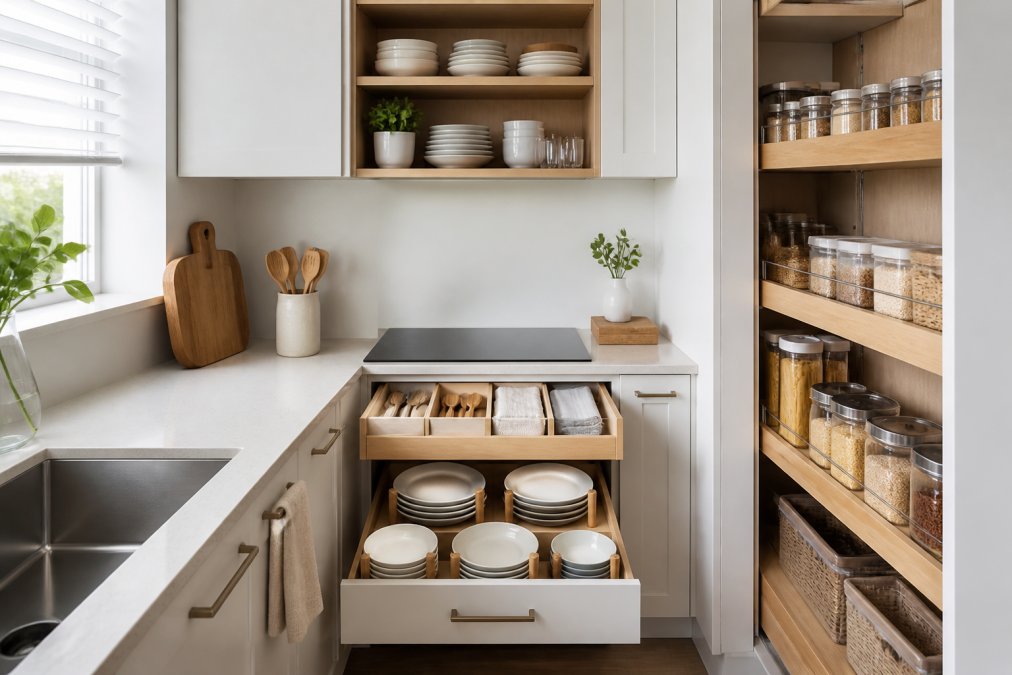
Interior systems add value when they match habits. Overbuilt organizers can waste space and money. Focus on the items people handle most.
Useful add-ons include.
-
Knife and utensil inserts sized to drawer width
-
Pull-out trash systems with sturdy frames
-
Tray dividers near ovens
-
Spice pull-outs placed close to prep zones
Hardware Specs That Make Procurement Easier
A clear spec sheet protects quality and shortens the buying cycle. It helps designers, builders, and purchasing teams speak the same language. It also supports clean substitutions if a part runs short.
These are the details that belong in a practical hardware standard.
A Simple Hardware Standards Table
| Category | Spec Detail | Preferred Range |
|---|---|---|
| Pulls | Center-to-center sizes | 5 in., 7 in., 10 in. |
| Knobs | Base diameter | 1 in. to 1.5 in. |
| Hinges | Close feature | Soft close, adjustable |
| Slides | Extension | Full extension |
| Slides | Load rating | 75 lb to 100 lb typical |
Sampling That Reduces Risk
Get physical samples early. A finish can look different under warm LEDs than under daylight. Grip feel changes once the piece is mounted on a door.
Use one door and one drawer as a test set. That mock cabinet can confirm proportions and comfort.
Care Guidance That Protects The Finish
Write simple care notes for owners and facility teams. Mild soap and water suits most finishes. Abrasive pads and harsh chemicals can dull coatings fast.
Common Hardware Errors That Inflate Costs
Hardware problems tend to show up in the first year. Many stem from small decisions made late in the process. Clean planning avoids the most common traps.
These are the missteps that lead to disappointment.
Undersized Pulls On Heavy Doors
Large pantry doors need a grip that feels secure. Small knobs can feel slippery. A longer pull spreads force across the hand and reduces torque at the fasteners.
Mixed Finishes Without A Clear Rule
A room can support more than one metal tone. A repeatable logic keeps it cohesive. One finish for plumbing and another for cabinet hardware can work when it stays consistent across the space.
Slide Specs That Ignore Drawer Width
Wide drawers need higher ratings and stable hardware. A standard slide can flex under load. That leads to racking and early wear.
A Practical Way To Choose Hardware With Confidence
Start with the room’s daily use and traffic level. Next, pick a small set of sizes that cover most doors and drawers. Then match hinge and slide specs to door weight and drawer load.
Good hardware feels calm in the hand. That calm becomes a lasting signal of quality, long after the last installer leaves the site.