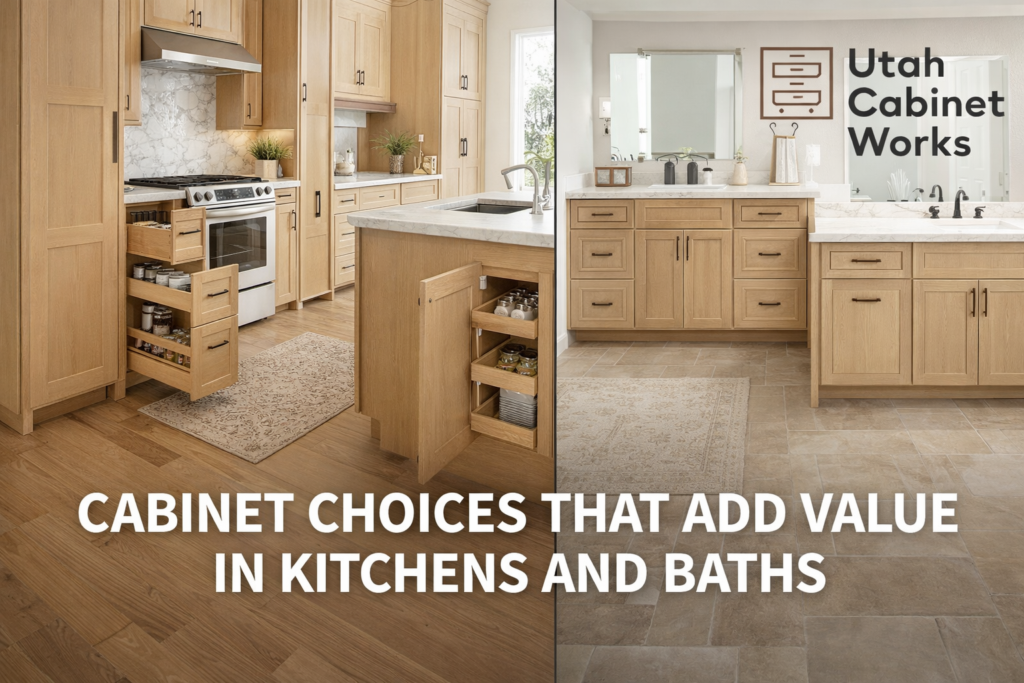
Cabinetry carries more weight than most people expect. It shapes how a home feels, how it functions day after day, and how confidently an owner can talk about quality at resale time. For builders, renovators, and property leaders, cabinets sit at the intersection of cost control, schedule certainty, and long-run satisfaction.
Utah Cabinet Works sees the same pattern across projects. Decisions on door style, substrate, and internal storage set the tone for every other finish in the room. A clear framework keeps the process calm and the result strong.
Cabinet Door Styles That Suit Real Life
Door style often becomes the visual anchor of a kitchen or bathroom, yet it affects more than looks. Profiles change cleaning effort, influence how light plays across a space, and set expectations around craftsmanship.
These are the door style choices that shape both appearance and day-to-day upkeep.
Shaker Doors
Shaker fronts sit in the sweet spot of familiarity and longevity. A simple frame with a recessed centre panel suits modern builds, heritage updates, and most in-between concepts. For many homes, this style reads as intentional without feeling showy.
Cleaning stays manageable, since the profile offers definition without deep grooves. For busy households or rental stock, that practicality matters.
Slab Doors
Slab fronts deliver a clean, flat face. That simplicity works well in contemporary homes, apartments, and projects where a streamlined feel supports other bold elements such as stone, metal, or feature lighting.
Maintenance tends to feel easier, thanks to fewer edges. Fingerprints can show on darker colours or high sheen finishes, so a thoughtful finish choice helps keep the look consistent.
Raised-Panel Doors
Raised-panel fronts bring depth and shadow. The profile can lift a traditional room, add warmth to a large kitchen, and pair well with classic hardware.
Detail creates more edges, so care routines take a little more time. In exchange, many clients appreciate the sense of craftsmanship and the richer facade.
Door Style Comparison Table
| Door Style | Visual Tone | Cleaning Effort | Common Fit | Notes On Cost Drivers |
|---|---|---|---|---|
| Shaker | Timeless, balanced | Low to moderate | Most kitchens and bathrooms | Frame work and finish quality influence price |
| Slab | Minimal, modern | Low | Contemporary homes, apartments | Material choice and finish type set the range |
| Raised Panel | Classic, detailed | Moderate | Traditional spaces, larger rooms | Profile depth and labour shape pricing |
Cabinet Materials That Set Durability And Cost
A cabinet can look sharp on install day and still disappoint later. Substrates, edge treatment, and hardware quality decide how well doors stay true, how drawers run, and how the box handles moisture swings.
Here are the main material choices that influence strength, stability, and total spend.
Plywood Cabinet Boxes
Plywood remains a popular choice for cabinet boxes, especially when clients want a strong structure with good fastener hold. High-quality plywood handles daily wear well and supports reliable joinery.
Moisture tolerance varies by grade and construction, so specification matters. A well-built box paired with solid assembly methods tends to support longevity.
Particleboard For Budget-Controlled Builds
Particleboard appears often in cost-sensitive work and large-volume projects. Modern sheets can perform well when edges stay sealed and exposure to water stays limited.
Many flat-pack systems rely on this substrate and can deliver solid service in the right environment. Clear planning around sinks, dishwashers, and leak risk helps protect the investment.
MDF For Painted Door Faces
MDF suits painted doors and panels thanks to its smooth surface. It can deliver a clean paint finish with fewer grain surprises than solid timber.
Moisture management still matters. Good sealing, quality paint systems, and sensible placement reduce swelling risk near wet zones.
Solid Timber For Select Features
Solid timber brings a natural feel that many buyers value. It suits feature islands, statement doors, or homes where timber character forms part of the brief.
Movement can occur with seasonal shifts. Smart construction methods, stable design choices, and suitable finishes help manage that reality.
Finishes And Edge Details
Material choice sets the base, then finishes determine how the surface handles knocks, heat, and daily contact. Two kitchens can share a door style and still age differently based on coating quality and edge protection.
A practical way to think about finish selection follows.
-
Painted surfaces support colour matching and a crisp look, with a need for careful cleaning products.
-
Thermofoil and laminate faces suit high-use zones when the edging and heat exposure remain well managed.
-
Stained timber highlights grain and can mask minor marks, with periodic touch-ups that keep it looking fresh.
Cabinet Layout Upgrades That Deliver Storage Gains
A smart layout often delivers more than a style change. Storage flow influences how a household moves through the kitchen, how clutter stays contained, and how the room feels at the end of a busy day. For a business owner or property manager, that function reduces complaints and supports higher perceived value.
The following are the layout upgrades that turn standard cabinetry into a better daily tool.
Deep Drawers In Base Runs
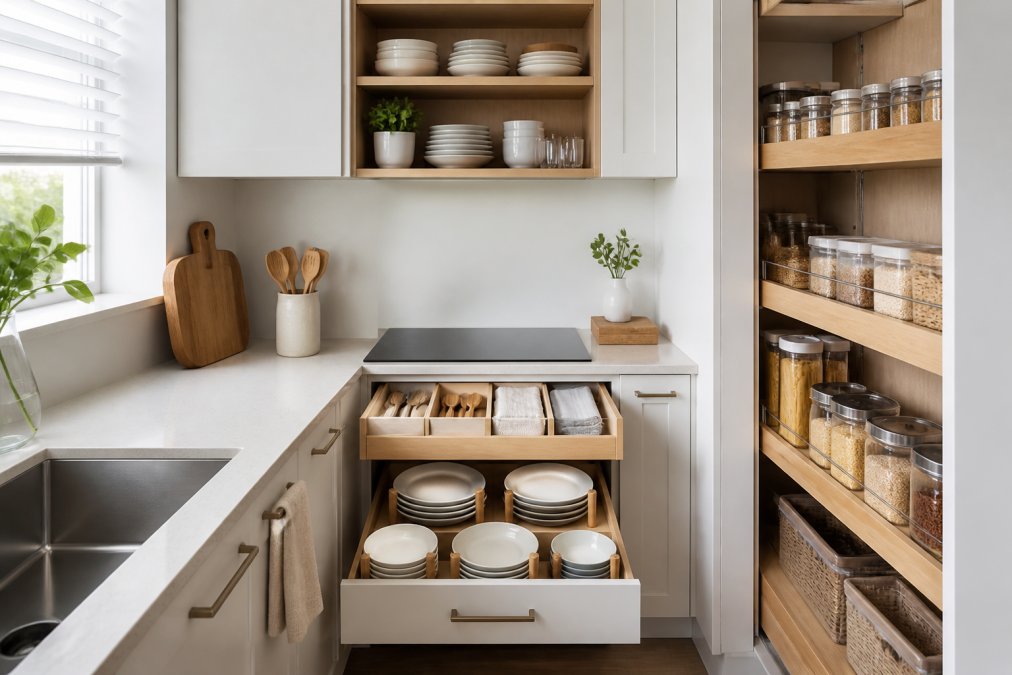
Deep drawers can replace lower doors and shelves in many base areas. They bring items forward, reduce bending, and keep cookware organised. For many users, this change feels like a quality-of-life upgrade from day one.
Pull-Out Trays Behind Doors
Pull-out trays offer a middle path for clients who prefer door fronts. Trays improve reach and help keep stacks from toppling. For family homes, this upgrade can cut daily frustration without changing the room’s look.
Corner Solutions That Use Dead Space
Corner cabinets can swallow space and still feel awkward. Hardware solutions such as swing trays, pull-out corner units, or angled drawers can reclaim that area.
Budget and access goals will guide the choice. A corner upgrade often pays back through better usability rather than a visual change.
Vertical Dividers For Trays And Boards
A narrow divider bay keeps baking sheets, chopping boards, and platters upright. That simple structure reduces pile-ups and prevents warping.
This feature fits well near ovens or prep zones. It suits serious cooks and casual users alike.
Waste And Recycling Pull-Outs
Built-in waste pull-outs keep bins out of sight and close to the prep area. They support a cleaner look and a smoother workflow.
For rental homes, this choice can reduce odours and make cleaning easier between tenancies.
Toe-Kick Drawers For Extra Capacity
Toe-kick drawers use the space beneath base cabinets. They can hold flat items such as table linen, pet supplies, or infrequently used tools.
This upgrade works best with careful planning around clearances. A strong build and smooth slides keep performance consistent.
Pantry Towers With Zoned Storage
Tall pantry cabinets can bring order to dry goods and small appliances. Internal pull-outs, adjustable shelves, and dedicated zones help prevent clutter from spreading across benches.
A pantry tower can reduce the need for extra upper cabinets. It often supports a cleaner wall line and a calmer room feel.
Quick Checklist For Planning Storage
-
Identify the main prep zone and place the bin pull-out close by
-
Map out cookware storage near the cooktop
-
Put tray dividers near ovens or benches used for baking
-
Reserve deep drawers for heavier items to reduce lift strain
-
Keep a tall pantry zone for bulk items and appliances
A Clear Way To Pull Choices Together
Decision fatigue derails many renovations. A simple sequence brings clarity and keeps the project moving.
Start with the door style that fits the property’s design direction. Next, confirm box and door substrates that match moisture risk, budget, and finish goals. Then finalise storage upgrades based on real habits, not aspirational ones.
Cabinets reward careful choices with years of smooth use. When the details align with daily life, the room feels settled from the moment the last handle goes on.